
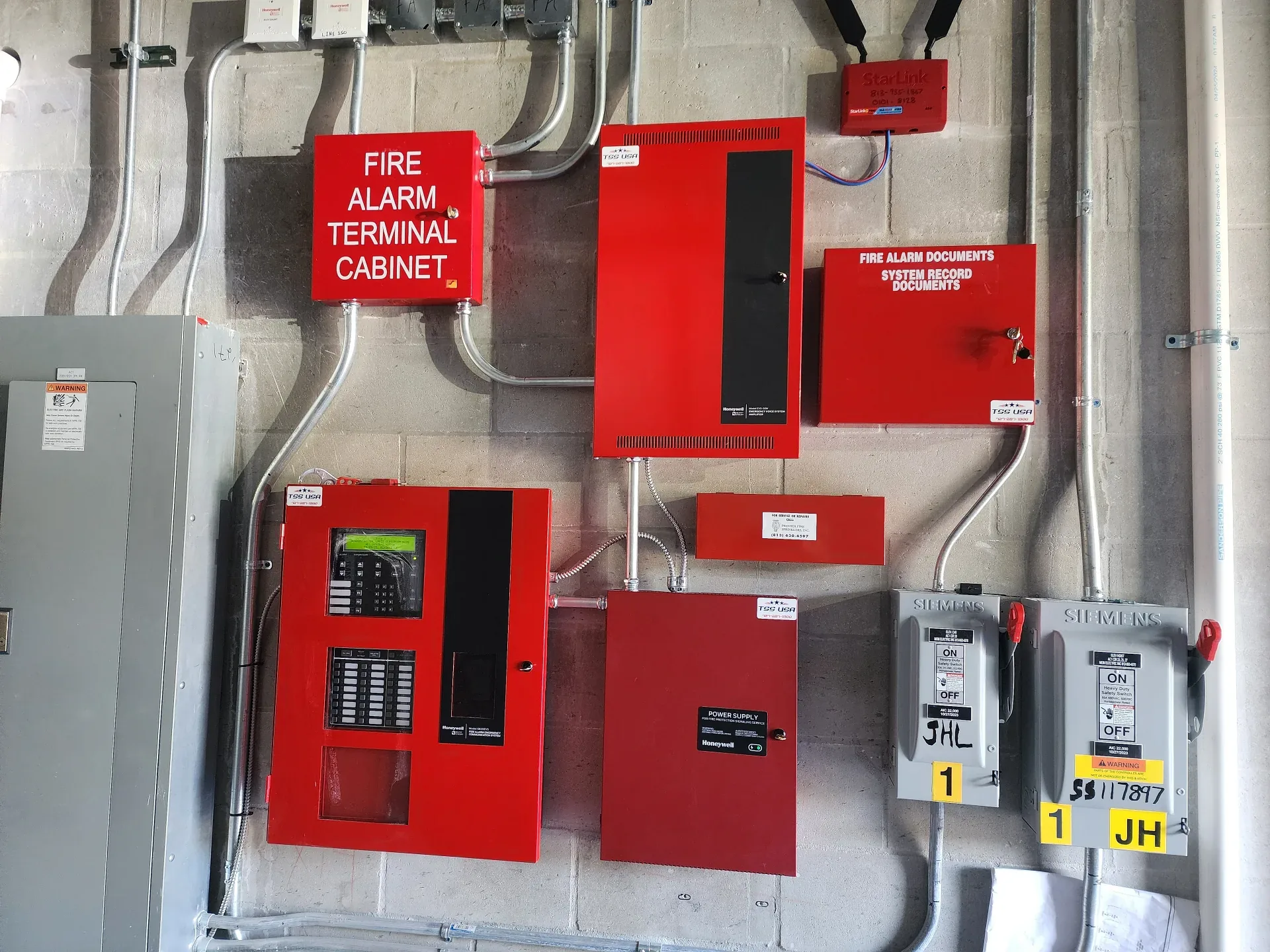
Fire Alarm Installation Safety Harbor, FL
 TSS USA — BICSI Corporate Member®
Your Fire Alarm Failed Inspection. Now What?
The fire marshal walks through your Safety Harbor building, finds devices past their service life, a panel with trouble conditions nobody addressed, and missing documentation from the last contractor. Now you have 30 days to bring the system into compliance or the certificate of occupancy goes on hold.
It’s a common situation for property managers and business owners across Safety Harbor and the surrounding area. The previous fire alarm contractor stopped returning calls, the inspection reports are incomplete, and nobody knows which devices are on which zone. TSS USA takes over fire alarm systems and brings them into compliance, including pulling permits and coordinating with the AHJ.
5.0 Stars on Google · Licensed Florida Contractor
Fire Alarm System Installation in Safety Harbor
Migration Before the Copper Sunset Hits
If your Safety Harbor office building's fire alarm panel still uses POTS lines to communicate with central station, the AT&T 2026 carrier shutdown affects you. We replace the communication module with a cellular dual-path communicator without disrupting the panel itself or building operations.
Inspection-Ready Documentation Across Tenant Changes
Office buildings change tenants often, and each transition creates documentation gaps. We deliver electronic PDF inspection reports retained for each annual cycle, supporting insurance documentation, AHJ records, and the next vendor (whoever it ends up being).
Lifecycle Tracking Before Devices Hit Age
Smoke detectors at 10 years and strobes after their UL 1971 flash count is exhausted both need replacement. We track device age across your system and quote batch replacements before they fail during inspection rather than letting inspections trigger the question.
Coordination With Tenant Build-Outs
When tenants build out new office space, devices must move, conduit routes change, and the system needs re-acceptance testing. We coordinate with the GC during the build and re-test the system after construction so the next inspection passes the first time.
Who We Work With in Safety Harbor
Full fire alarm system packages for new builds across Safety Harbor and the surrounding area, from shell-core to final tenant finishes. We stay on schedule and help pass final inspections.
We help maintain fire alarm code compliance across portfolios in Safety Harbor and the surrounding area. Fast turnarounds on retrofits, upgrades, or failed fire alarm inspections.
End-to-end fire alarm installation so you can focus on opening your business, not chasing permits or coordinating inspections. We serve the Safety Harbor area and beyond.
Annual fire alarm inspections, system troubleshooting, and monitoring transfers. We keep your building code-compliant and your documentation current.
5.0 Stars on Google · Licensed Florida Contractor
More About Fire Alarm Systems in Safety Harbor
Why Office Buildings Outgrow Their Fire Alarm Vendor
Tenant Turnover Leaves Documentation Gaps
A new tenant builds out a suite, devices get covered or relocated, but documentation never updates. The fire marshal finds the drift between as-built and as-installed on the next walk.
Trouble Signals Live On the Panel for Months
A panel with persistent trouble conditions isn't compliant. NFPA 72 requires investigation and resolution. Office building staff often dismiss them because nobody can explain what they mean.
POTS Sunset Hits Offices First
Office buildings often have the oldest fire alarm communication infrastructure. The AT&T 2026 copper retirement windows are happening now for these systems, not in some future year.
Battery Age Catches the Annual Inspection
Standby batteries fail load tests before they fail voltage tests. Annual load testing per NFPA 72 catches what visual or basic-voltage inspection misses, but only if your vendor actually performs it.
What Office Fire Alarm Service Covers Beyond a Panel
Annual NFPA 72 Inspection With PDF Report
Functional testing of every device, panel input, and notification appliance, documented in electronic PDF format for insurance, AHJ, and tenant records.
Trouble Signal Investigation
Faults logged on the panel get investigated and resolved, not deferred until next year. Persistent troubles are inspection deficiencies waiting to happen.
Cellular Communicator Migration
POTS-to-cellular before the AT&T sunset reaches your central office. Tampa Bay market: $300-$500 installed, $40-$60/month single-path monitoring.
Build-Out Coordination
Pre-renovation walkthrough plus post-renovation re-acceptance test for tenant build-outs. Devices get moved, the system gets re-tested, documentation gets updated.
Device Age Tracking
Lifecycle scheduling for smoke detectors (10-year NFPA 72 recommendation) and strobes (UL 1971 finite flash count). Batch quoting at known intervals prevents inspection-triggered surprise quotes.
Sensitivity Testing Per NFPA 72
Functional smoke detector sensitivity testing every alternate year, not test-button-only. Detectors drifting outside their listed range get replaced before the AHJ flags them.
Our Standards
Clean Workmanship
Square devices, neat wire management, no unnecessary junctions. Makes future work faster and safer.
Documentation That Matters
You’ll get zone maps, labeled wire diagrams, test logs, all ready for the next guy, whether that’s us or your maintenance team.
Communication That Keeps the Job Moving
We stay in sync with your superintendent, electrician, and building inspectors. You won’t be chasing us.
A Local Contractor You Can Count On
Based in Pinellas Park, we regularly install and inspect fire alarm systems across Safety Harbor and the surrounding area. When you need service, we answer. When your system needs attention, we show up.
Fire Alarm Across Safety Harbor Professional Offices
Multi-Tenant Office Buildings
Single FACP serving multiple suites across Safety Harbor. Documentation must track tenant changes; we update zone maps and device lists as suites build out.
Single-Tenant Corporate Offices
Larger systems with multiple zones, addressable devices, and integration with building management systems. We coordinate fire alarm with the building's BMS where the protocol supports it.
Mixed-Use Office and Light Retail
Combined occupancy types create overlapping NFPA requirements. We design the FACP zoning to handle both occupancy types correctly rather than forcing one set of rules on the other.
Co-Working and Flex Spaces
Frequent layout changes drive frequent re-acceptance test needs. We schedule walk-throughs aligned with the operator's reconfiguration cadence so the system stays inspection-ready.
Fire Alarm Systems in Safety Harbor
Safety Harbor’s commercial core is compact, and a lot of the work sits near Main Street and the waterfront. That creates a specific fire alarm challenge: older buildings with tight wall cavities, decorative ceilings, and very little room for new conduit. A tenant improvement might add treatment rooms, convert an office to a studio, or split one space into two suites, and the fire alarm layout has to follow the new egress path.
The Safety Harbor Spa area and nearby older structures also push contractors to think about appearance and pathways, beyond device counts. If you can’t hide conduit cleanly, you need another plan that still satisfies the AHJ and NFPA 72.
For these projects, an addressable fire alarm system is usually the right call because it gives clear device identification during alarms and troubles. The difference is speed and accuracy during a reset. If the system reports “Smoke 17” with an exact room name on the annunciator, staff can respond without walking the whole building.
When conduit pathways are limited, wireless fire alarm devices can be a practical option for select initiating devices, but only when the panel and AHJ accept that architecture.
Elevator recall is another detail that gets missed in mixed-use buildings that have a lift. If the project includes an elevator, the fire alarm has to handle recall and interface points correctly, and the acceptance test needs those functions verified, not assumed.
Safety Harbor is a short drive from our Pinellas Park base, so TSS USA can treat punch-list corrections like part of the job instead of a “next week” problem. That matters when a GC is aiming for a certificate of occupancy and the fire alarm acceptance test is one of the last gates. We coordinate rough-in and trim-out so devices aren’t installed before final ceiling and door locations are set. It prevents rework.
On retrofit sites, TSS USA will walk the space first and propose a wiring path that respects finished surfaces, then build the point list and Record of Completion package around what actually got installed. Would you rather see a neat surface raceway in one hallway, or torn-up plaster across three rooms?
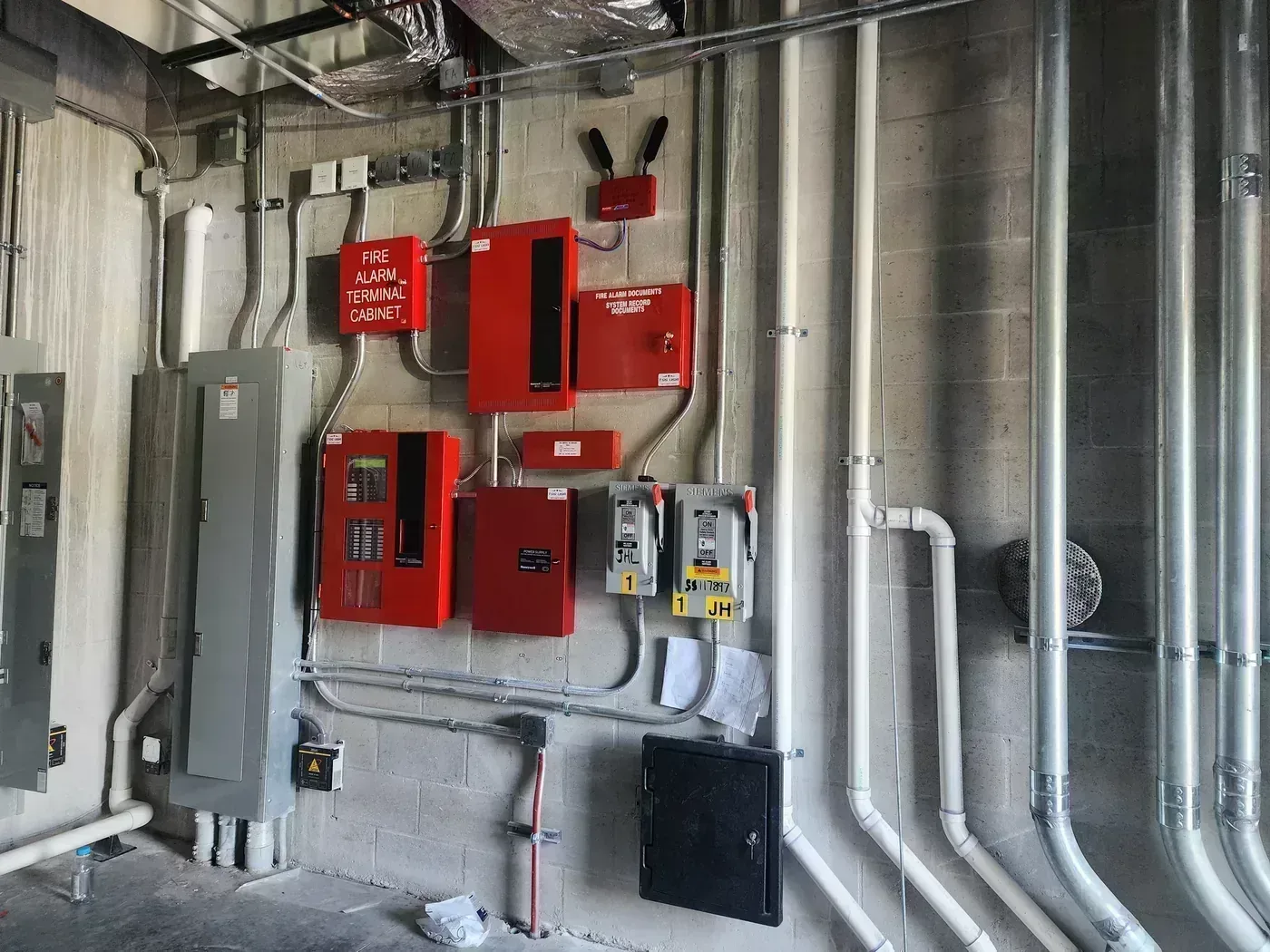
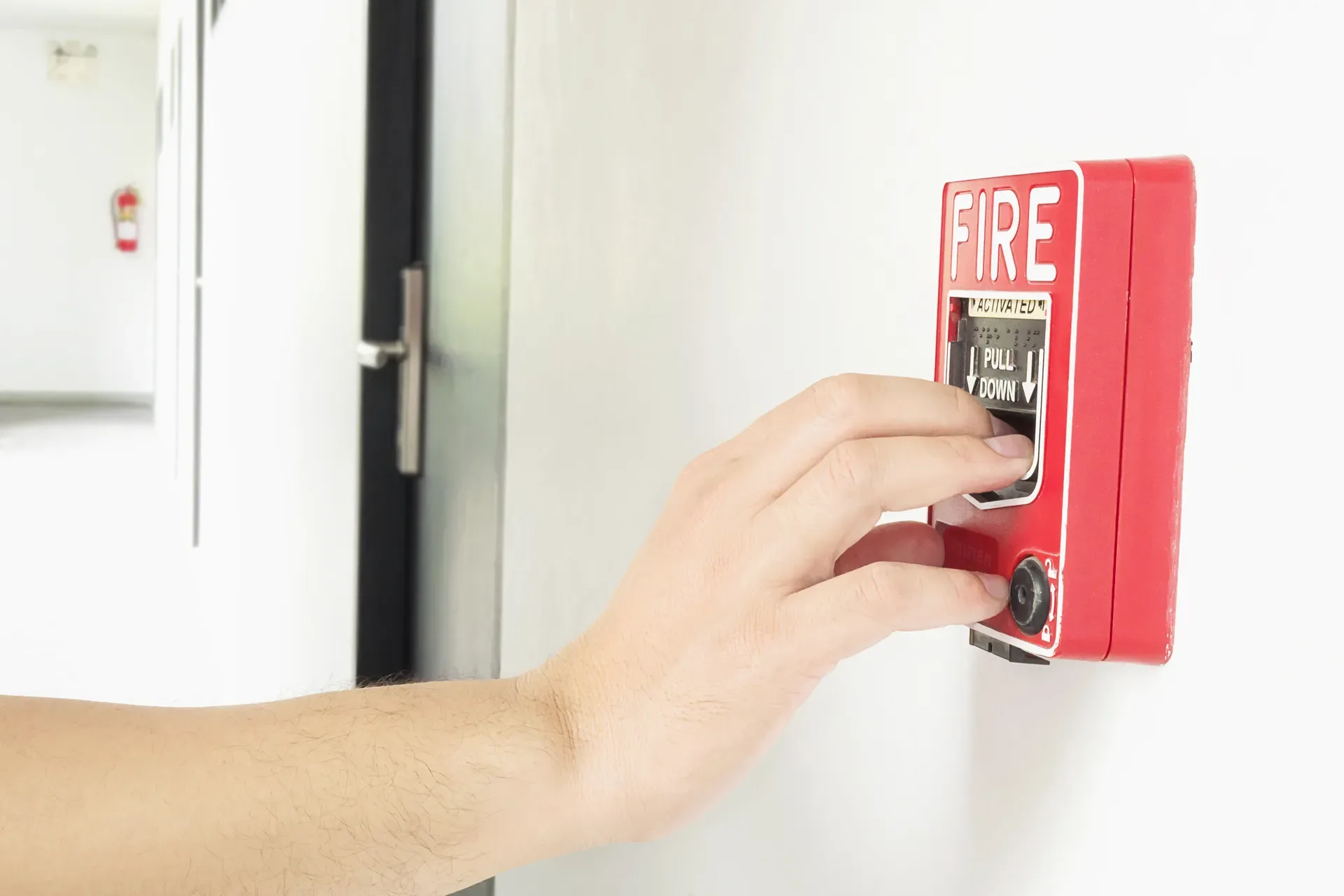
Easy Inspections Follow Good Installs.
Fire Alarm Systems for New Commercial Construction
New commercial construction projects in the Tampa Bay region require fire alarm system installation that is coordinated from the earliest design phase through certificate of occupancy.
Our fire alarm contractors work directly with general contractors, architects, and engineers to integrate fire alarm design into the building plans, ensuring device placement meets NFPA 72 spacing requirements and local code amendments before the first wall goes up. This coordination eliminates costly change orders and ensures your building passes its fire alarm inspection on the first attempt.
During the rough-in phase, our fire alarm installers run all wiring while walls and ceilings are open, concealing cables within the structure for a clean, professional finish. We install conduit where required by code, pull fire-rated cable to every device location, and stub out connections for the fire alarm control panel, monitoring equipment, and integration points with sprinkler systems and elevator recall.
Our team coordinates daily with electricians, plumbers, and HVAC contractors to avoid conflicts and keep the project on schedule.
From shell-core builds to full tenant improvement projects, we handle every aspect of commercial fire alarm installation: engineering, permitting, device installation, panel programming, system testing, and final inspection coordination. Our goal is to deliver a fully operational, code-compliant fire alarm system that is ready for monitoring connection and occupancy approval without delays.
Whether you are building a single retail suite or a multi-story office complex, experienced fire alarm contractors who understand the construction process save you time, money, and inspection headaches.
Why Safety Harbor Businesses Choose TSS USA for Fire Alarm Systems
Competitive Pricing
We price every project honestly and competitively. Free on-site estimates with no obligation. No hidden fees when the invoice arrives. If you've received quotes from other contractors, compare them — we consistently come in at or below the market rate for the same scope and quality.
Faster Communication
We respond to quote requests the same day. Most Safety Harbor projects get a written estimate within 24–48 hours of the site walkthrough. You won't wait a week to hear back. If a question comes up mid-project, you get an answer the same day — not whenever someone checks their inbox.
Work That Passes Inspection
Every installation is tested, labeled, documented, and signed off by a licensed Florida contractor before we close out. Structured cabling gets Fluke DSX certification reports on every drop. Fire alarm systems are designed and installed to NFPA 72 and pass AHJ inspection the first time. We don't leave until the job is done right.
Licensed, Certified & Verified
Florida Electrical Specialty Contractor License ES12000985. Florida Fire Alarm Contractor License EF20001875. BICSI Corporate Member. CommScope authorized partner. 5.0 stars on Google from verified commercial customers across Tampa Bay. We're the real deal — not a handyman with a drill and some cable.
Frequently Asked Questions
Most commercial buildings in Safety Harbor are required by code to have a fire alarm system, but the exact requirements depend on your occupancy type, square footage, and local fire codes. We can review your building plans or inspect your current setup to determine what’s required to stay compliant and safe across Safety Harbor and the surrounding area.
Yes, we take over fire alarm inspections for businesses across Safety Harbor and the surrounding area, including the Safety Harbor area. We know what to look for and can inspect your system efficiently. Many property managers and business owners switch to our inspection service for faster turnarounds and more detailed reporting.
A licensed fire alarm contractor in Safety Harbor should hold a Florida EF license, carry proper insurance, and have experience with NFPA 72 system design, installation, and inspection. They should pull permits, coordinate with the local AHJ, and provide test reports that satisfy your fire marshal. TSS USA is a licensed fire alarm contractor serving Safety Harbor and Safety Harbor and the surrounding area.
A basic fire alarm system for a small business in Safety Harbor typically runs $6,000-$12,000 installed, depending on building size, device count, and code requirements. That covers the fire alarm control panel, pull stations, horn/strobes, smoke detectors, and programming. Annual inspections start at $200 and scale with system size. 24/7 monitoring runs $40-$60/month. We handle permitting and AHJ coordination across Safety Harbor and the surrounding area so you don't have to chase paperwork.
TSS USA holds Florida Fire Alarm Contractor License EF20001875. We design, install, inspect, and monitor commercial fire alarm systems that pass AHJ inspection the first time. We handle permits, coordinate with the fire marshal, and provide full as-built documentation on every project in Safety Harbor and across Safety Harbor and the surrounding area. We beat competitor pricing, respond to quote requests same day, and are rated 5.0 stars on Google from verified commercial customers.
Sometimes, yes, and Safety Harbor is one of the few cities where wireless options come up often because older buildings can be hard to pathway without damage. Wireless initiating devices can reduce conduit runs in plaster walls or timber framing, but the system still needs an approved fire alarm control panel and compatible wireless gateways.
Battery maintenance also becomes a real item, not an afterthought, because device batteries have replacement intervals you need to track. The AHJ still expects NFPA 72 testing and clear documentation, including a point list that identifies each wireless device location. TSS USA treats wireless as a targeted tool, not the default for every device.
In most Safety Harbor tenant buildouts, addressable is the better long-term choice even if the first cost is higher. A conventional fire alarm system tells you a zone is in alarm, which can mean searching multiple rooms in a compact suite. Addressable points identify the exact detector or pull station, and that shortens resets and reduces confusion during false alarms.
It also helps when suites change over time, because programming and labeling can be updated per device instead of reworking whole zones. Conventional can still make sense for very small footprints with simple egress, but many mixed-use buildings benefit from the extra clarity of addressable reporting.
A small Safety Harbor buildout with 15 to 30 devices often breaks into three phases: rough-in during framing, trim-out after ceilings and paint, then the acceptance test once power, monitoring, and final signage are complete. Installation and programming can be 2 to 4 working days depending on conduit difficulty, but the acceptance test date depends on the AHJ calendar.
The job is not “done” until signals are verified through the communicator to the central station and the NFPA 72 paperwork is complete. If elevator recall or other interfaces are involved, add coordination time with the elevator contractor so the test isn’t delayed on site.
An addressable fire alarm system assigns a unique digital address to every device on the circuit, so the fire alarm control panel can identify the exact location of an alarm or trouble condition. A conventional fire alarm system groups devices into zones. When a detector activates, the panel identifies the zone but not the specific device.
Addressable systems are preferred for larger commercial buildings because they speed up emergency response, simplify troubleshooting, and reduce false alarm downtime. Conventional systems remain cost-effective for smaller spaces with straightforward layouts.
Annual fire alarm testing is the full test required by NFPA 72 that covers every device and function in the system. Semi-annual testing is a mid-year check that some jurisdictions or insurance companies require, typically focusing on critical components like monitoring communication, control panel functions, and a sampling of detection devices.
Some high-risk occupancies, such as healthcare facilities and high-rise buildings, may require more frequent testing. Your fire alarm contractor can help you determine the correct testing frequency based on your occupancy type and local requirements.
Key factors include building square footage and layout, number of floors, ceiling height, construction type (open ceiling vs. drop ceiling vs. concrete), total device count, system type (addressable or conventional), fire alarm control panel features, monitoring communication method, integration requirements (sprinklers, elevator recall, access control), permit fees, and whether the installation is new construction or a retrofit.
Retrofitting existing buildings typically costs more due to fishing wire through finished walls and working around occupied spaces. We provide transparent pricing with no hidden fees after completing a thorough site evaluation.
5.0 Stars on Google · Licensed Florida Contractor
Other Services in Safety Harbor
Structured Cabling
Structured cabling, fiber optics, and network infrastructure for commercial buildings.
Access Control Systems
Modern door access and credential management for businesses.
Small Business Security Cameras
Small business security camera systems with remote viewing and smart alerts.
Business Phone Systems
Cloud VoIP business phone systems — local installation, full configuration, and ongoing support.
Small Business Network Setup
Complete network setup including internet, WiFi, switches, and infrastructure for small businesses.
Burglar Alarm Systems
Commercial intrusion detection and 24/7 monitoring services.